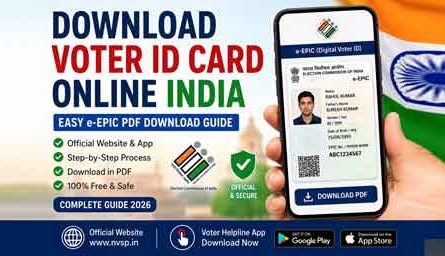

A significant update has been announced that will impact many individuals nationwide. The authorities have officially opened the registration window for the SIR list. This development means that those whose names are not on the SIR list can now add their names through a designated process. Furthermore, in a move that broadens inclusivity, non-residents can also give their names for potential inclusion. This article serves as your comprehensive, step-by-step guide to understanding this process, ensuring you can navigate the registration smoothly and correctly. We will break down the eligibility criteria, the exact procedure for submission, and special provisions for non-residents.
This announcement addresses a long-standing query from many citizens and connected individuals who found themselves omitted from previous compilations. The opening of this rectification window is a crucial opportunity to ensure accurate and representative public records. Whether you are a resident who was inadvertently missed or a non-resident with a legitimate claim for inclusion, understanding the protocol is essential. Failure to follow the official guidelines could result in further delays or omission. Let us delve into the specifics of who is eligible, what documents you need, and where you must submit your information.
Understanding the SIR List and Its Importance
Before proceeding with registration, it is vital to grasp what the SIR list represents and why your inclusion matters. The SIR, or Systematic Inclusion Registry, is an official roster maintained by governmental authorities for planning, administrative, and statutory purposes. Being on this list can be a prerequisite for accessing certain public services, benefiting from schemes, or fulfilling legal obligations. Its primary function is to create a verified, centralized database of individuals pertaining to a specific cohort, often related to demographic, professional, or eligibility-based categorizations.
An omission from this list can sometimes lead to inconveniences, such as delays in processing applications or inability to avail of particular entitlements. Therefore, this open registration period is not merely a procedural formality but a critical chance to secure your rightful place in official records. The authorities have emphasized that this is a time-bound opportunity, underscoring the need for prompt action from all eligible parties. The inclusion of non-residents marks a progressive step, acknowledging the role and connections of the diaspora or external stakeholders.
Step-by-Step: How to Add Your Name to the SIR List
The process to add your name to the SIR list has been streamlined for user convenience. Follow these steps meticulously to ensure a successful submission. First, visit the official portal of the concerned department or regulatory body. Look for the notification or banner titled “SIR List Rectification” or “Add Your Name to SIR.” Do not rely on third-party websites, as they may provide outdated or incorrect information. The official site will host the legitimate application form and detailed instructions.
Second, you will need to download and carefully fill out the prescribed Form SIR-A1. This form requires accurate personal details including full legal name, date of birth, contact information, and a unique identification number (such as a National ID or Passport number). Any discrepancy between the form and your supporting documents will cause rejection. Third, compile the necessary supporting documents. Typically, this includes a clear scan of your ID proof, a recent photograph, and any residency or eligibility certificate as specified. Double-check the official document checklist before proceeding.
Special Provisions for Non-Resident Registration
In a welcome update, the guidelines explicitly state that non-residents can also give their names for the SIR list. This provision caters to individuals who may hold citizenship or have strong legal and functional ties to the jurisdiction but currently reside abroad. The process for non-residents is largely similar but with a few key distinctions. Non-residents must use the same Form SIR-A1 but will have additional fields to fill, such as overseas address and primary country of residence.
Furthermore, the accepted identification documents may differ. Non-residents are generally required to submit a copy of their passport, along with any document proving their historical or legal link to the country (e.g., birth certificate, old national ID). These documents may need to be notarized or apostilled, depending on the international agreements in place. Submission is primarily digital, via the official portal’s dedicated upload section, which is accessible from anywhere in the world. This digital-first approach significantly eases the process for those living overseas.
Common Mistakes to Avoid and Verification Process
Many applicants face delays due to avoidable errors. One common mistake is submitting blurry or unreadable copies of documents. Ensure all scans are clear, color, and complete. Another frequent error is entering a nickname instead of the full legal name exactly as it appears on the primary ID. Do not leave mandatory fields blank; if a field is not applicable, mark it as “N/A” as per instructions. For non-residents, failing to get documents notarized where required is a major point of failure.
After submission, your application enters a verification queue. The authorities will cross-reference your details with existing databases. This process can take several weeks, so patience is necessary. You will likely receive an acknowledgment receipt with a tracking number immediately after submission. Use this number on the official portal’s “Check Status” page to monitor progress. Do not submit the form multiple times, as this can create duplicates and cancel your application. Await official communication regarding approval or any requests for additional information.
Download Link for SIR Name Registration
Applicants can use the official platform or app to submit their details. The application is designed for easy navigation and secure data submission.
👉 Download / Access Link:
https://www.india.gov.in/
Also Read
- Ayushman Card: Complete Guide to Eligibility, Benefits, Registration & Download
- SIR Voter List Check in Kerala – Easy Online Verification & Download Guide (2026 Update)
- SIR Form Status Check 2026 – How to Verify ASD List Status Easily
Final Thoughts and Taking Action
This open registration window is a pivotal opportunity to correct omissions and ensure comprehensive records. The ability for non-residents to also give their names is a forward-thinking policy that strengthens communal and administrative bonds. We strongly advise all eligible individuals to act within the announced deadline, which is typically strictly enforced. Keeping a printed or digital copy of your submitted form and acknowledgment receipt is crucial for future reference.
To begin your registration, your first step is to obtain the official form and the latest guidelines. We have provided a direct link to the source below for your convenience. By following the detailed guidance in this article, you can confidently navigate the procedure and secure your inclusion in the SIR list. Remember, accurate and timely submission is the key to a hassle-free experience.